
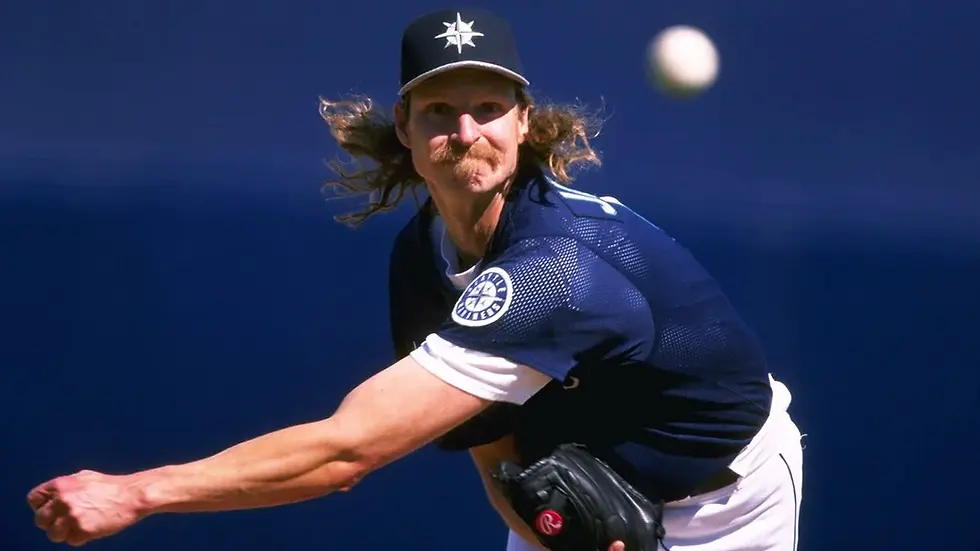
The 15 Randy Johnson Cards Every Collector Should Know
Summary & Career Highlights
Rookie Year: 1988
Iconic Rookie Card: 1989 Upper Deck #25
Highest Public Sale: 1999 Metal Universe #139 Randy Johnson Gem Masters 1/1 PSA 7 for $44,400 with Fanatics Premier in September 2025
Similar Career Players: Pedro Martinez, Greg Maddux, Roger Clemens, Curt Schilling, Nolan Ryan
Players with Similar Cards to Check Out: Pedro Martinez, Greg Maddux, Mike Piazza, Frank Thomas, Ken Griffey Jr., Tony Gwynn, Derek Jeter
Career Highlights
5x Cy Young Award winner (1995, 1999, 2000, 2001, 2002)
2001 World Series co-MVP with Curt Schilling
10x All-Star
303 career wins
4,875 career strikeouts (2nd all-time at retirement)
Perfect game on May 18, 2004
MLB strikeout leader 9 times
Hit bird with fastball during spring training game in 2001
Hall of Fame inductee (2015)
Led league in ERA 4 times
Iconic Cards
Randy Johnson's card catalog spans one of the hobby's most transformative decades, capturing both the evolution from junk wax base cards to premium chromium parallels. His collecting story begins with scarce ProCards minor league issues and 1989 rookie variations like the notorious Fleer Marlboro billboard corrections, then tracks through every major technological sports card breakthrough like Topps Tiffany's glossy experiments, Upper Deck's premium photography, Finest's debut refractors, and Skybox's groundbreaking acetate construction.
What defines Johnson's iconic status is how his cards showcase the industry's relentless innovation throughout the 1990s. From Flair Showcase's first-ever 1/1 Masterpiece to Metal Universe's player-specific backgrounds and Fleer Brilliants' legendary 24kt gold parallels, his catalog reads like a timeline of manufacturing breakthroughs that give collectors many paths to choose from. These iconic cards selected emphasize the experimental spirit of late-90s card companies pushing boundaries with serial numbering, acetate technology, and premium materials. Collecting Randy Johnson means owning pieces of hobby history through cards that represent pivotal moments when the industry reinvented itself through competition and innovation.
Icon Key
Prospective Card Cost:
💰 - Under $250
💰💰- Under $1,000
💰💰💰- Under $5,000
💰💰💰💰- Under $15,000
💰💰💰💰💰- Over $15,000
Rarity:
💎 - Common & High Serial Number
💎💎- Serial Numbered or Pop Under 200
💎💎💎 - Serial Numbered or Pop Under 100
💎💎💎💎 - Serial Number or Pop Under 50
💎💎💎💎💎 - Does this card even exist? Serial Number or Pop under 10
Please note that this site contains affiliate links, and The Smarter Collector may earn a commission if you make a purchase through these links. This comes at no additional cost to you and helps support the site so we can continue to provide valuable content. Thank you for your support!
1986 ProCards
West Palm Beach Expos


As an eBay Partner, I may be compensated if you make a purchase.
Prospective Card Cost: 💰💰
Rarity: 💎
About the Card: The 1986 ProCards West Palm Beach Expos represents Randy Johnson's earliest card. ProCards produced these minor league sets with extremely limited regional distribution, making them significantly harder to find than his Topps or Upper Deck rookie offerings. The basic design features ample white borders and thin card stock that's fairly condition-sensitive, with a gem rate around 10%. As an XRC (extended rookie card), it predates any of his rookie cards and offers collectors motivated by "Firsts" a unique option.
1989 Fleer
#381


As an eBay Partner, I may be compensated if you make a purchase.
Prospective Card Cost: 💰💰
Rarity: 💎
About the Card: The 1989 Fleer Randy Johnson is one of the hobby's most fascinating rookie cards, not because of what's on the front, but because of what Fleer kept trying to hide. A Marlboro billboard visible in the background forced the company to correct the card mid-production, resulting in at least 13 distinct variations ranging from a nearly untouched "Clear" version (only three known copies) to the common fully blacked-out final print. It's the rookie card of a five-time Cy Young winner and Hall of Famer. While not as notorious as Fleer's Billy Ripken "F-Face" card, this is an early error card to take note of.
1989 Topps Tiffany
#647


As an eBay Partner, I may be compensated if you make a purchase.
Prospective Card Cost: 💰💰💰
Rarity: 💎
About the Card: The 1989 Topps Tiffany set represents Topps' breakthrough into premium collecting, featuring glossy UV coating on white cardstock that creates a dramatically different finish from the base set. With print runs around 25,000 sets versus 300,000+ regular Topps, this parallel runs roughly ten times scarcer. The glossy surface proves notoriously condition-sensitive, making high grades exceptionally challenging due to fingerprints, surface wear, and edge chipping. The set was sold exclusively as complete sets through hobby shops. This marks Johnson's first premium parallel, combining rookie-year significance with the technical innovations that defined late-80s collecting evolution.
1989 Topps Traded Tiffany
#57T


As an eBay Partner, I may be compensated if you make a purchase.
Prospective Card Cost: 💰💰
Rarity: 💎
About the Card: Topps Traded was the pre-cursor to Topps Update and captured the mid-year call ups and player trades. So when Randy Johnson was traded from the Montreal Expos to the Seattle Mariners in the summer of 1989, Topps Traded gave collectors their first opportunity to pick up a copy of Johnson's rookie year card in a Mariners uniform. Limited to an estimated 15,000 factory sets (Compared to 25,000 for Topps Tiffany) sold exclusively through hobby dealers, this parallel showcases the glossy white cardstock and UV coating that defined the Tiffany line. Despite the different in print run, graded population between the two cards is comparable, showcasing collector's admiration for the card.
1989 Upper Deck
#25


As an eBay Partner, I may be compensated if you make a purchase.
Prospective Card Cost: 💰
Rarity: 💎
About the Card: Upper Deck's 1989 debut revolutionized baseball cards with tamper-evident holograms, premium card stock, and photography that made competitors' offerings look dated overnight. Johnson's #25 carries the coveted "Star Rookie" designation with its distinctive logo—branding that became synonymous with premier rookie cards. The set's clean white borders and sharp action shots established the visual template for premium releases. While not as scarce as some parallels, this inaugural Upper Deck issue remains foundational to the hobby's modern era, representing the moment when card quality permanently shifted upward.
1991 Topps Desert Shield
#225


As an eBay Partner, I may be compensated if you make a purchase.
Prospective Card Cost: 💰💰
Rarity: 💎
About the Card: The Desert Shield parallel represents Topps' most unique distribution experiment: An exclusive, one-time release for military personnel stationed in the Middle East during Operation Desert Storm. The cards are identical to the standard 1991 Topps design except for a gold foil stamped, "Desert Shield" printed on the card. Print runs were estimated to be between 6,500 and 7,000 distributed solely through military PX stores. The harsh desert storage conditions and limited military audience created a perfect storm (Excuse the pun) of scarcity. This intersection of baseball history and military heritage appeals to collectors beyond the typical junk wax card, while the months spent in desert heat make high-grade examples exceptionally difficult to find.


1993 Finest
#154 Refractor


As an eBay Partner, I may be compensated if you make a purchase.
Prospective Card Cost: 💰💰💰
Rarity: 💎💎
About the Card: 1993 Finest represents a pivotal moment in sports cards. The debut Finest set introduced the refractor and the accompanying technology that became the blueprint for all future chromium parallels. 1993 Finest was Topps' response to the premium product offerings of Upper Deck's SP and Fleer's Flair, pushing innovation through competition. With only 4,000 12-box cases produced and refractors inserted at roughly 1:15 packs, we can estimate that 241 copies of each refractor exist. Johnson sits in the middle of the loaded checklist and can be picked up for a bargain compared to what some of his contemporary position players like Griffey and Bonds go for.
1996 Pinnacle Select Certified
#17 Mirror Gold /30


As an eBay Partner, I may be compensated if you make a purchase.
Prospective Card Cost: 💰💰💰
Rarity: 💎💎💎💎
About the Card: Select Certified's Mirror technology launched Pinnacle's direct assault on Topps Finest's chromium dominance, featuring a highly reflective finish that created stunning visual depth. The Mirror Gold parallel adds distinctive gold foil treatment over the chromium base, producing a unique two-tone effect. Not serial numbered, but with an announced print run of just 30 copies, this represents one of the lowest mainstream retail print runs available in 1996. Select Certified's Red, Blue, Gold rainbow structure helped establish the multi-parallel format that would define late-90s collecting. Plus, this photo perfectly captures Johnson's mid-90's mullet.
1997 E-X2000
#41 Essential Credentials /99


As an eBay Partner, I may be compensated if you make a purchase.
Prospective Card Cost: 💰💰
Rarity: 💎💎💎
About the Card: 1997 E-X2000 introduced the iconic Essential Credentials parallel that featured Skybox's groundbreaking acetate technology, creating unprecedented visual depth through multi-layered transparency effects. Limited to just 99 copies, this silver holographic finish represents the debut of what became one of the most influential parallel concepts in sports cards. The innovative die-cut construction and layered acetate create stunning visual impact but make these cards notoriously condition-sensitive, with edge separation and corner damage common issues. The set also featured a Credentials parallel numbered to 299 that offers an option to collectors looking for a more affordable option.
1997 Flair Showcase Legacy Collection Row 1
#20 Masterpiece 1/1


As an eBay Partner, I may be compensated if you make a purchase.
Prospective Card Cost: 💰💰💰💰💰
Rarity: 💎💎💎💎💎
About the Card: Flair Showcase's 1997 Masterpiece parallel was the hobby's first true 1/1 card and fundamentally changed how collectors view scarcity. Flair used a three-tiered "Row" variation (Row 0, 1, 2) that featured completely different photography for each level. While Row 0 was the most rare of the base versions, all three had a 1/1 Masterpiece. Each Masterpiece featured distinctive purple foil treatment separating it from the blue foil Legacy Collection parallels which were numbered to 100. While his Row 0 and Row 1 Masterpieces have both sold, the Row 2 version has yet to surface publicly.
1998 E-X2001
#73 Essential Credentials Now /73


As an eBay Partner, I may be compensated if you make a purchase.
Prospective Card Cost: 💰💰💰
Rarity: 💎💎💎
About the Card: Skybox's 1998 E-X2001 showcased peak acetate technology with multi-layered construction, die-cutting, and holographic foil that pushed card manufacturing boundaries. But the set's most recognizable element was the reverse serial numbering of the Essential Credentials Now and Future parallels. A player's Essential Credentials Now parallel was serial numbered to their position in the checklist, so for Johnson that was /73. The Essential Credentials Future parallel was serial numbered to 101-their position in the checklist, essentially how many spots away from the bottom of the checklist they were which was /28 for Johnson.
1998 Metal Universe
#9 Precious Metal Gems /50


As an eBay Partner, I may be compensated if you make a purchase.
Prospective Card Cost: 💰💰💰💰
Rarity: 💎💎💎
About the Card: Precious Metal Gems ("PMGs") had already achieved legendary status in basketball when Skybox first brought Metal Universe to baseball. What sets 1998 Metal Universe apart from its other releases is that each card features a unique background design specific to that player. Randy Johnson's shows him in front of the Seattle space needle and features Johnson mid-delivery in landscape orientation. The PMG and it's "Scope" refractor pattern, introduced decades before Panini would use it once again, is at the top of many collectors wish lists.
1999 Fleer Brilliants
#117TG 24KT Gold /24


As an eBay Partner, I may be compensated if you make a purchase.
Prospective Card Cost: 💰💰💰💰
Rarity: 💎💎💎💎
About the Card: 1999 Fleer Brilliants is considered one of the greatest one-and-done sets of the 90's and modern cards in general. A simple checklist with a small number of parallels and two inserts made the set approachable, affordable, and hid one of the hobby's crown jewels'. In addition to the base card, a blue parallel, and a gold parallel /99, the set also had the 24kt gold parallel serial numbered to 24. The cards are printed on thick 24-point styrene plastic stock coated with mirroring mylar foil - not traditional cardstock at all. The design features a gold background with rainbow-holographic reflective mirror foil and 24kt gold logo. Its a card that seems to set new sales records every time it comes to market.
1999 Skybox Premium
#58 Star Rubies /50


As an eBay Partner, I may be compensated if you make a purchase.
Prospective Card Cost: 💰💰💰
Rarity: 💎💎💎
About the Card: The 1999 Skybox Premium Star Rubies parallel is one of the most coveted parallel from the late '90s. It features a distinctive holofoil finish with ruby-red foil detailing and is serial numbered to just 50 copies. Johnson's card continues the landscape orientation theme, catching him mid-delivery toward the plate. For collectors who can't justify the price point on his base set Star Rubies, Johnson also appears in the "Spring Fling" subset, which has its own Star Rubies parallel and typically sells for a fraction of the cost.
2003 Ultimate Collection
#DP-SJ Dual Randy Johnson Curt Schilling Patch /99


As an eBay Partner, I may be compensated if you make a purchase.
Prospective Card Cost: 💰
Rarity: 💎💎💎
About the Card: Upper Deck's 2003 Ultimate Collection represented the pinnacle of high-end baseball cards, and this dual patch featuring Johnson and Schilling showcases the company's pioneering work in premium memorabilia design. Serial numbered to just 99 copies, the card pairs oversized game-worn patches from both Hall of Fame pitchers in Upper Deck's signature clean layout. Ultimate Collection's checklist reads like a who's who of baseball greatness, making every card feel significant. The dual patch format was still relatively new in 2003, and this Johnson-Schilling pairing captures two legends at their peak.
A Few of My Favorites
These favorites prioritize design character and aesthetic appeal over market value, celebrating the quirky creativity that defined late-90s card design. From Donruss Signature's nickname inscriptions to Circa Thunder's psychedelic backgrounds and Metal Universe's embossed sheet metal aesthetic, the selections showcase cards chosen for their visual personality rather than pure rarity. The common thread is appreciating the experimental spirit and bold design choices that made this era so distinctive.
1997 Donruss Signature
Notable Nicknames Auto /200


As an eBay Partner, I may be compensated if you make a purchase.
Why It's a Favorite: The 1997 Donruss Signature Notable Nicknames set stands out as one of the more creative autograph concepts from the late 90s. The 10-card autograph insert set were all inscribed with the player's nicknames. Johnson of course signed his as Randy "Big Unit" Johnson. Serial numbered to 200 copies , the set strikes an appealing middle ground between accessibility and scarcity. The clean design showcases the nickname prominently without cluttering the layout.
1998 Donruss Crusade
#41 Red /25


As an eBay Partner, I may be compensated if you make a purchase.
Why It's a Favorite: The 1998 Donruss Crusade set didn't introduce the hobby to rainbow chases, but it created a compelling one with three colored parallels: Green /250, Purple /100, and Red /25. Prices for the parallels align with their rarity, offering entry points for collectors with different budgets. It's one of the more recognizable one-and-done sets from the end of the Pinnacle era and holds a special place in my heart.
1998 Skybox Circa Thunder
#134 Super Rave /25


As an eBay Partner, I may be compensated if you make a purchase.
Why It's a Favorite: Circa Thunder's design feels quintessentially 90s. The grungy font used for player badges, set against trippy psychedelic backgrounds, takes you right back to 1998. The base set had two parallels: Rave numbered to 150 and Super Rave numbered to 25. The gold foil on the Super Rave (which looks remarkably similar to the card stock used on 1999 Star Rubies parallels) works beautifully on Johnson's card and earned its spot on my favorites list. It's not a card for everyone, but it has a fierce following who love the aesthetic.
1999 E-X Century
#32 Essential Credentials Future /89


As an eBay Partner, I may be compensated if you make a purchase.
Why It's a Favorite: 1999 E-X Century and the Essential Credentials parallel continued Skybox's ambitious and quirky parallel design from the 1998 set. Essential Credentials Future parallels were gold while Essential Credentials Now parallels were silver. The multi-layer construction features acetate card stock, die cutting, and foil usage which created a genuinely impressive multi-element card. Johnson was number /32 in the checklist, which meant his Essential Credentials Now parallel was numbered out of 32 and his Future parallel was numbered out of /89. This makes for an interesting alternative if you're priced out of the 1998 Essential Credentials but still want one for your collection.
1999 Metal Universe
#139 Precious Metal Gems /50


As an eBay Partner, I may be compensated if you make a purchase.
Why It's a Favorite: 1999 Metal Universe holds just as much popularity as the 1998 release in collector circles today, yet the design couldn't be more different. Cards were printed on embossed etched foil with grungy sheet metal backgrounds consistent across every player in the set. The Precious Metal Gems (PMG) parallel was numbered to 50 and printed on gold foil holographic card stock. Even with 50 copies out there, this card is exceedingly rare and only surfaces for public sale once every few years.
Additional Resources
Randy Johnson Baseball Reference
A go-to source for Johnson's complete MLB stats, milestones, and award history. Helpful for tracking the on-field accomplishments that often drive card value.Card Ladder Player Index – Randy Johnson
Explore historical pricing trends, recent sales, and collector sentiment for Johnson's cards tracked on the Ladder. A great tool for understanding market performance across sets and grades.PSA Set Registry – Randy Johnson Basic Set
Get a curated list of Johnson's base cards recognized by PSA’s Registry. It’s a useful framework for collectors building a focused, registry-worthy PC.Trading Card Database (TCDB) – Randy Johnson
Searchable checklist of every Randy Johnson card, including base, parallels, inserts, and oddballs. Ideal for set collectors or anyone looking to complete a player run.
More Player Profiles
If you enjoyed this Player Profile, here are a few more worth exploring

Derek Jeter

Nomar Garciaparra
